BEFORE SPECIALIZATION, DEVELOP THE ATHLETE
Early specialization has become one of the most discussed topics in modern sport development. Across different sports, researchers, coaches, psychologists, and performance specialists continue to debate the long-term effects of exposing children to highly specific training environments at increasingly younger ages.
In many cases, the pressure to compete, earn opportunities, secure roster spots, or accelerate performance development has created systems where young athletes are pushed toward specialization before fundamental physical, cognitive, and emotional capacities are fully developed.
Scientific literature in motor learning and athlete development consistently suggests that early experiences should prioritize broad movement exposure, adaptability, coordination, decision-making, creativity, and overall game understanding rather than premature restriction to highly specialized roles.
This does not mean specialization is inherently negative.
High-level sport eventually requires advanced positional refinement, tactical sophistication, and role-specific expertise. The question is not whether specialization matters — it does.
The real question is when specialization begins to replace development instead of supporting it.
In volleyball, this discussion becomes even more important.
The modern game increasingly encourages early positional definition. Young athletes are often identified very early as liberos, setters, middle blockers, or pin hitters before they fully experience the complete demands of the sport.
But the game should first build the athlete before limiting the athlete to a position.
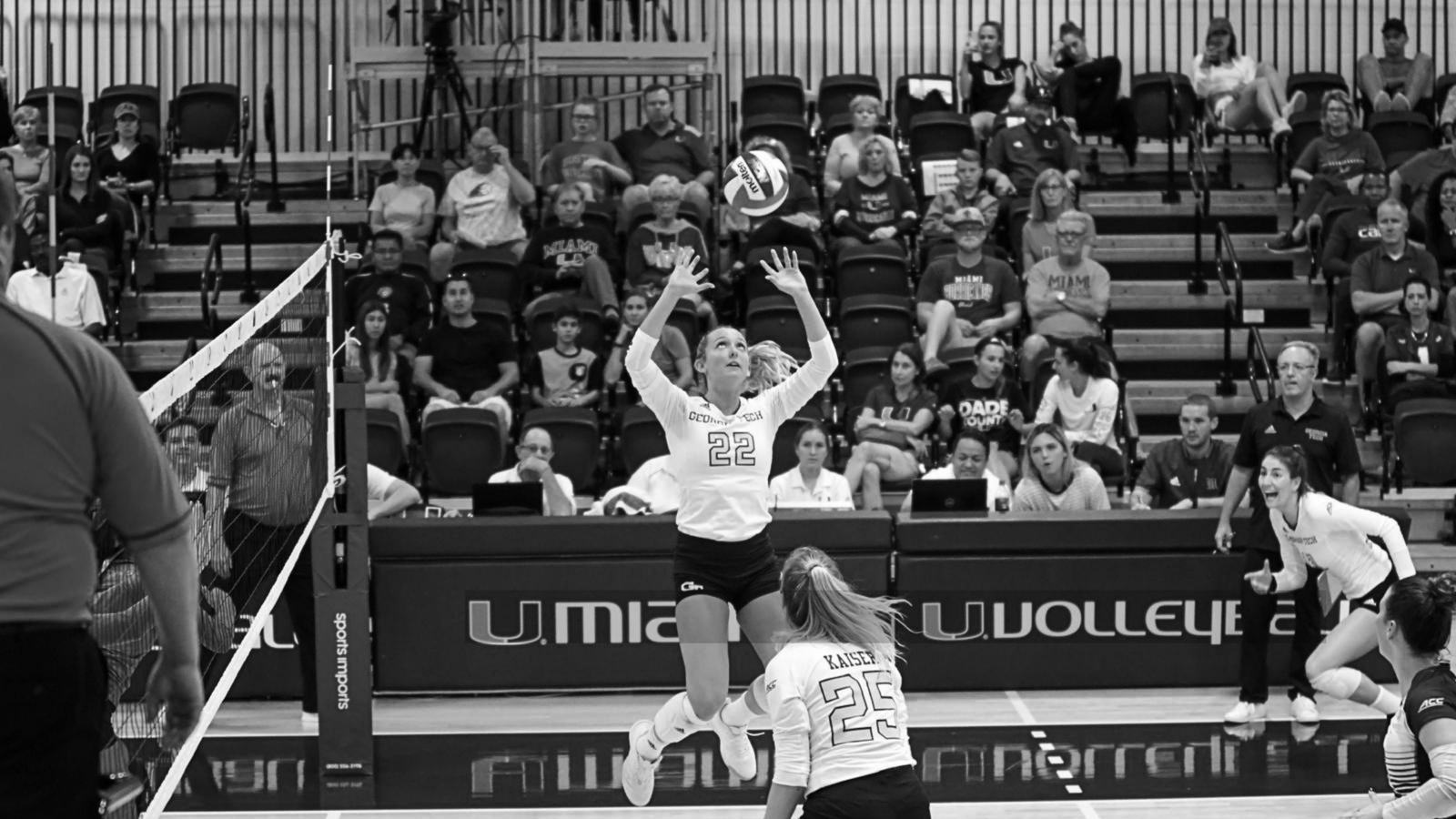
A developing player should experience attacking, setting, defending, blocking, reading the game, adapting under pressure, and solving different movement problems. These experiences build not only technical versatility, but also motor intelligence and a deeper understanding of volleyball itself.
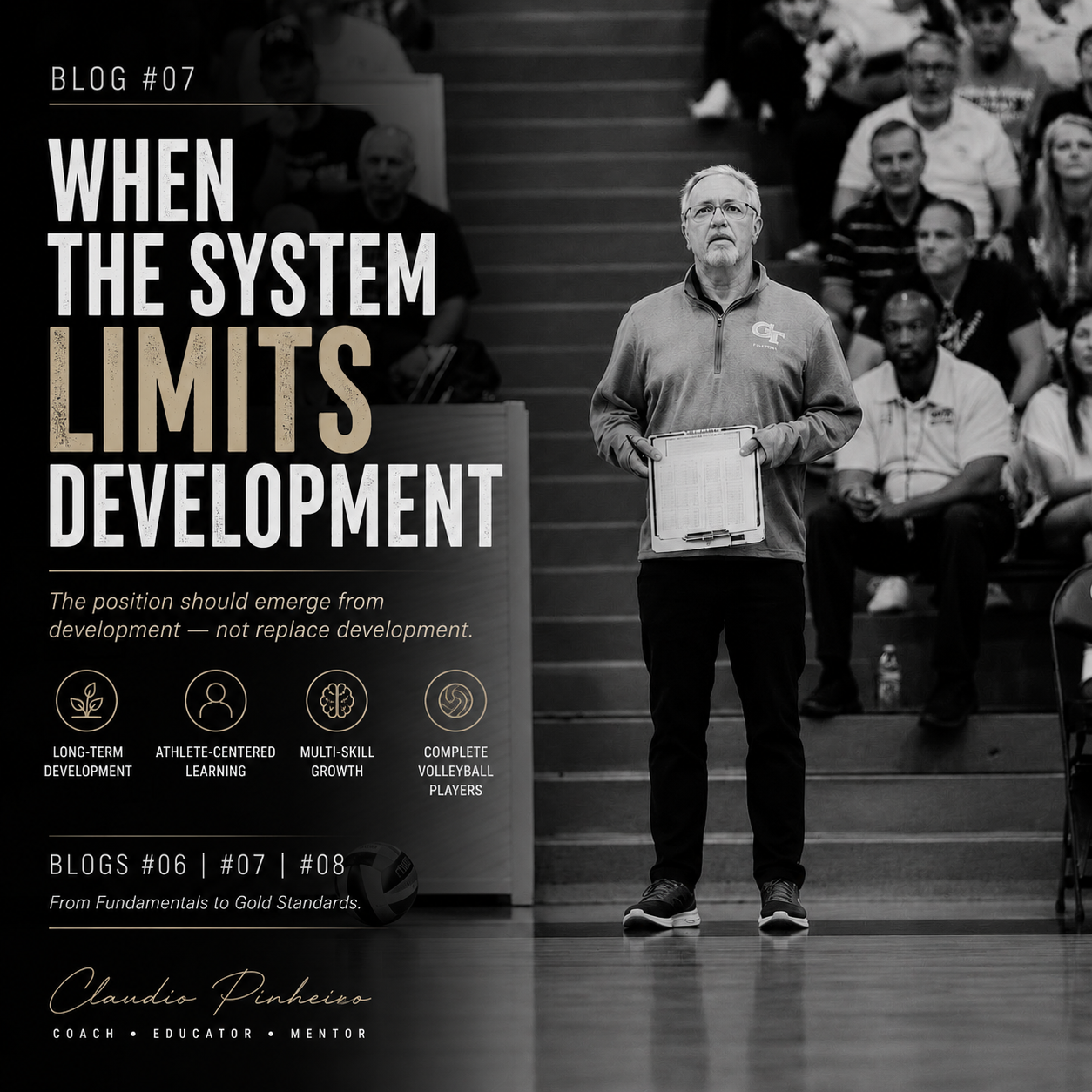
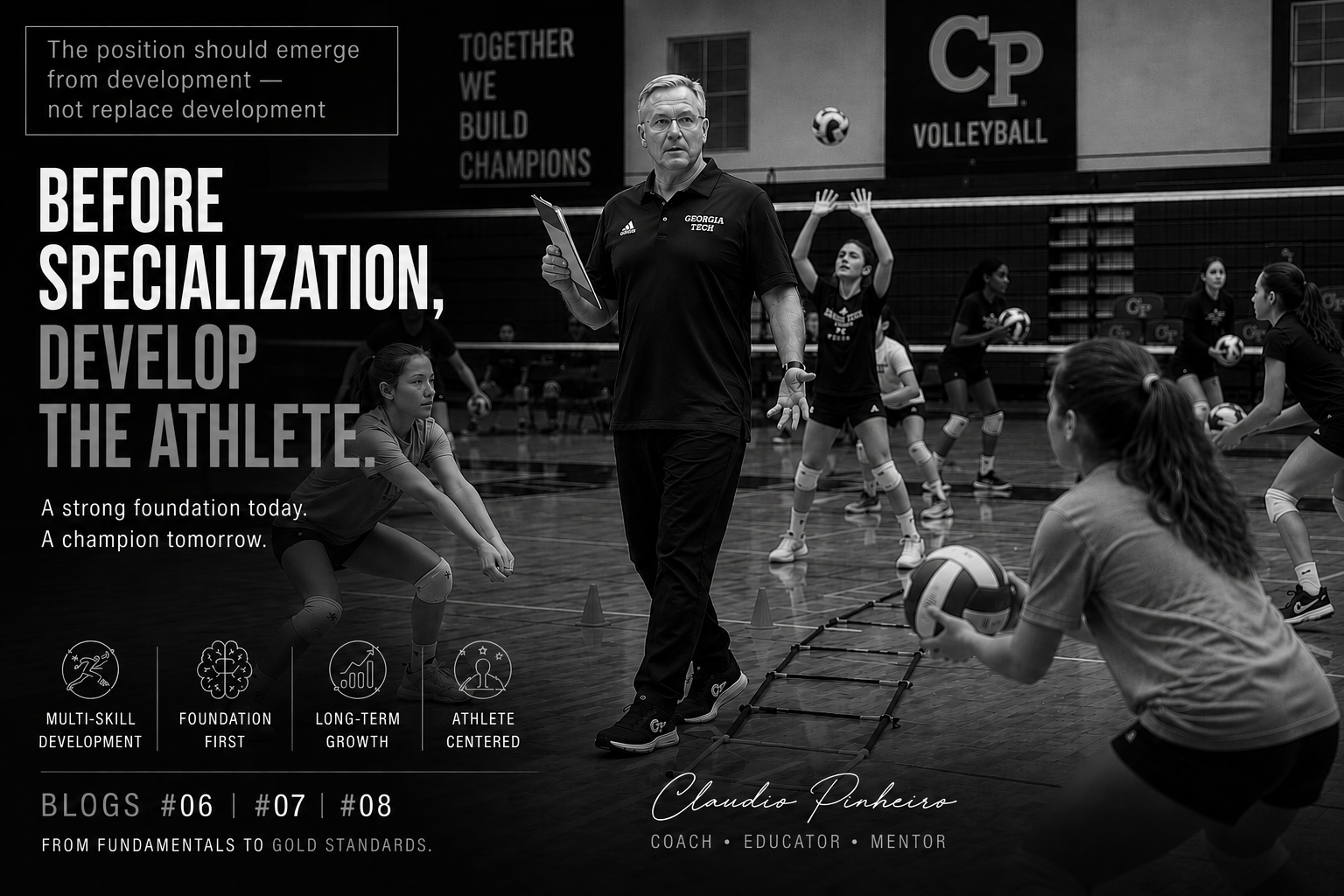
The position should emerge from development — not replace development.
In many developmental stages, the rules, training structures, and learning environments themselves should encourage broader experiences rather than premature restriction. Young athletes benefit from rotating responsibilities, exploring different game situations, and developing a more complete relationship with the sport before being defined by one specialized role.
A young libero should still understand attacking systems.
A young setter should still learn defensive reading.
A young middle should still experience ball control and backcourt organization.
The complete athlete understands the complete game.
This discussion is not about eliminating specialization.
It is about respecting the developmental process before accelerating specialization.
When specialization happens too early, athletes may improve temporarily within narrow functions while limiting broader motor development, adaptability, creativity, and long-term versatility.
And in modern volleyball, adaptability is performance.
The game changes constantly.
The rally changes constantly.
The athlete must constantly reorganize perception, movement, timing, and decision-making.
Early experiences should prepare athletes to solve problems — not simply repeat patterns.
Over the past decades, research in talent identification and athlete development has increasingly questioned the reliability of predicting future elite performance during early developmental stages.
Longitudinal studies repeatedly demonstrated that early performance, isolated physical characteristics, and temporary competitive success do not consistently predict long-term excellence.
Athlete development is influenced by a complex interaction of biological maturation, motor learning, psychological adaptation, environmental conditions, coaching quality, motivation, and long-term training exposure.
For this reason, many researchers caution against premature selection, exclusion, or specialization decisions based solely on current performance levels.
Perhaps one of the greatest challenges in youth sport is not identifying who performs best today.
It is recognizing who still has the capacity to develop tomorrow.
After more than a decade working daily inside the American volleyball system, I also feel a professional responsibility to contribute to broader discussions about athlete development and the future of the sport itself.
This reflection is not written from the perspective of criticism alone, but from years of observation inside competitive environments at multiple levels of volleyball.
Throughout my career, I have seen extraordinary coaches whose knowledge was built through experience as former players. Practical experience matters. Living the game matters. Understanding competition from inside the court matters.
But modern athlete development requires more than experience alone.
It also requires understanding how athletes learn, how motor skills develop, how pressure influences behavior, how long-term progression should be structured, and how training environments shape future performance.
In many countries with strong volleyball traditions — including Italy, Brazil, France, Germany, Japan, and others — coaching education increasingly involves progressive certification systems, pedagogical preparation, long-term athlete development models, and continuing education requirements for both indoor and beach volleyball environments.
The objective is not simply to produce competitive teams.
It is to produce healthier, more adaptable, more intelligent, and more complete athletes over time.
As volleyball continues to evolve physically, tactically, and cognitively, the discussion about early specialization can no longer be reduced to simple opinions or short-term results.
We must also ask deeper questions about what kind of athletes the system is producing — and what kind of game we want volleyball to become in the future.
This project was also created for young coaches searching for direction, deeper understanding, and a more organized vision of athlete development.
For coaches beginning their journey, the challenge is often not lack of passion — but lack of structure, mentorship, and clarity about what truly matters in the long-term process.
For athletes, especially younger players, improvement is not only physical or technical. Real development also involves awareness, discipline, adaptability, emotional control, and the ability to perform under pressure.
The goal of these reflections is not to offer simple answers.
It is to stimulate better questions.
To help coaches think deeper.
To help athletes train with intention.
To help parents better understand long-term development.
And to create environments where development remains broader than early specialization.
Because long-term performance is rarely built through limitation.
It is built through intelligent progression.
⸻
In the next reflections, we will continue expanding this discussion through practical examples observed in modern volleyball environments.
We will examine how competition structures, substitution systems, positional specialization, recruiting pressure, club economics, and the pursuit of immediate results may influence long-term athlete development.
Topics such as:
• Early positional restriction
• Defensive specialists replacing developing attackers
• Middle blockers who rarely serve or defend
• Modified rules for youth development
• Short-term success versus long-term adaptability
• The impact of specialization on college and international volleyball
• The relationship between athlete versatility and national team development
will become part of a broader discussion about the future of volleyball development.
Because the discussion is bigger than positions.
It is about how we choose to build the game itself.
⸻
The ideas discussed throughout this reflection are supported by research in long-term athlete development, motor learning, sport psychology, and youth sport participation models developed across different countries and performance systems.
This reflection is not intended as an academic publication, but as an applied discussion connecting scientific understanding with practical realities observed daily in competitive volleyball environments.
⸻
Note: This article is part of a three-part series exploring athlete development, long-term performance, and specialization in volleyball. A complete list of references and supporting literature will be provided at the conclusion of Part III.
⸻
Standards create discipline.
Discipline sustains excellence.
From fundamentals to gold standards.
Claudio Pinheiro