Following Episode 01 of Inside the Program featuring Head Coach Michelle Collier, we now continue the series with Episode 02 — a conversation with former Georgia Tech setter Matti Oliver.
After exploring leadership and program culture from a head coach’s perspective, this reflection now shifts to the athlete’s side of the game — decision-making, leadership, development, and the responsibility of running an offense at the collegiate level.
Matti Oliver
Leadership, Decision-Making, and the Responsibility of a Setter
Former Setter — Georgia Tech & UCLA
Founder & Director — 407 Volleyball Club
I had the privilege of coaching Matti Oliver during her time at Georgia Tech, where I worked directly with our setters.
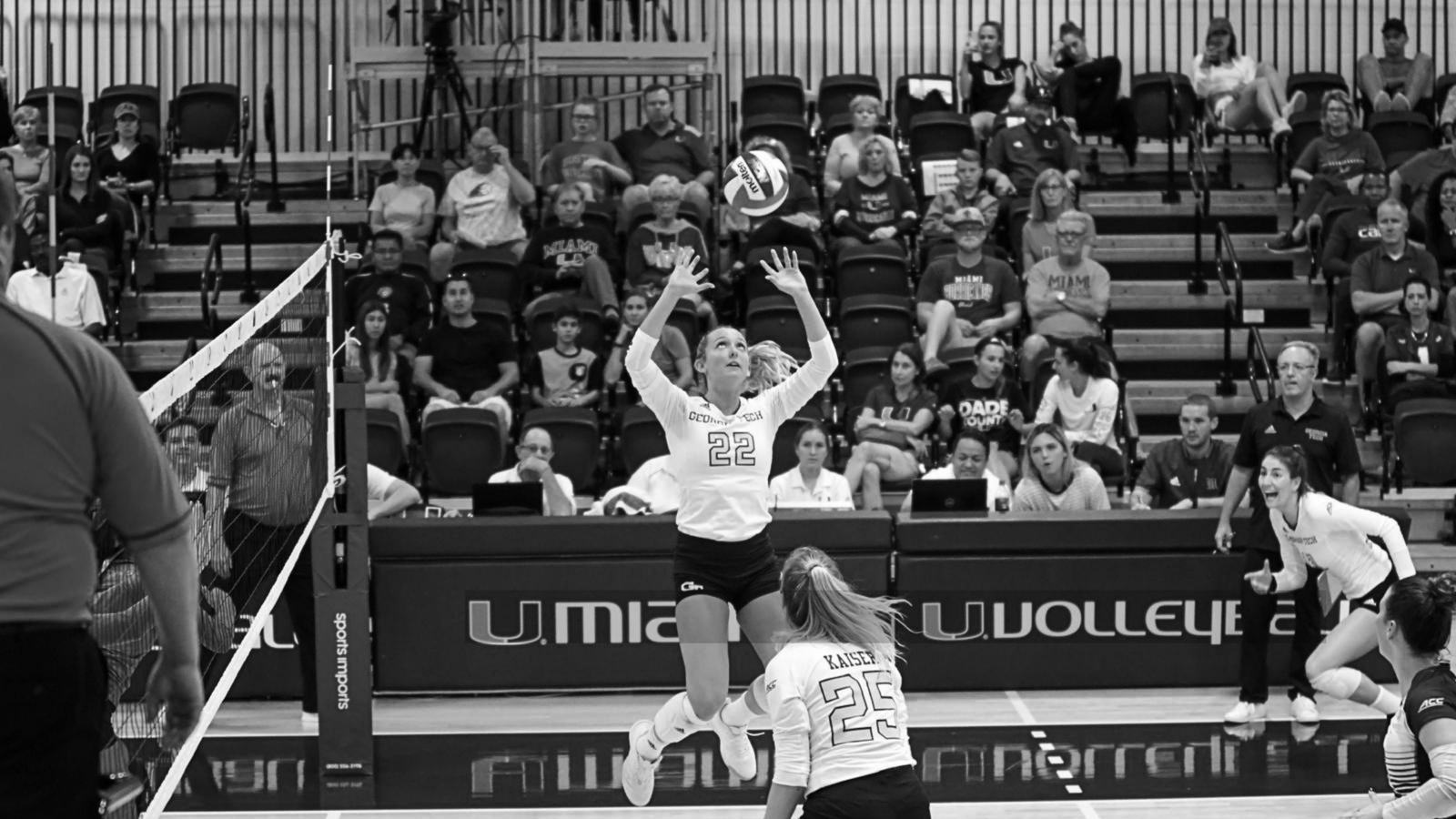
Matti developed into one of the most accomplished setters in program history. She was named ACC Setter of the Year and played a central role in leading one of the most efficient offenses in the country. She finished her Georgia Tech career with 4,103 assists, ranking among the program’s leaders in the rally-scoring era.
After completing her collegiate career at UCLA, Matti continued her journey in the sport as the Founder and Director of 407 Volleyball Club, where she now helps develop the next generation of athletes.
In this reflection, Matti shares lessons from her journey as a setter, competitor, and now coach and club director.
⸻
When I first became a setter…
When I first became a setter, I thought the position was simply about setting the ball.
Over time, I learned that being a setter is about something much bigger — leadership, decision-making, trust, and responsibility for the rhythm of the entire team.
I vividly remember Coach Claudio showing me videos of racecars and asking me which one I wanted to be. How I needed to control the game at a fast pace while still maintaining control.
My journey through Georgia Tech, UCLA, and now as the founder of 407 Volleyball Club has taught me lessons that continue to shape how I see the game.
⸻
1. How Volleyball Started
When did volleyball become serious for you?
Once I started playing volleyball at 12 years old, I knew it was something I didn’t want to stop. I fell in love with the game early on and realized pretty quickly that I wanted to take it seriously.
It gave me so many opportunities and introduced me to incredible people along the way.
I started on one of the lowest teams at a large club in Orlando and slowly worked my way up, eventually earning a spot on a 1’s team by my 17s and 18s years.
When did you decide to become a setter?
I started as a setter because I wanted to touch the ball every point.
⸻
2. Transition to College Volleyball
What surprised you most when you arrived at Georgia Tech?
What surprised me most when I arrived at Georgia Tech was how much of the game happens outside of just skill work.
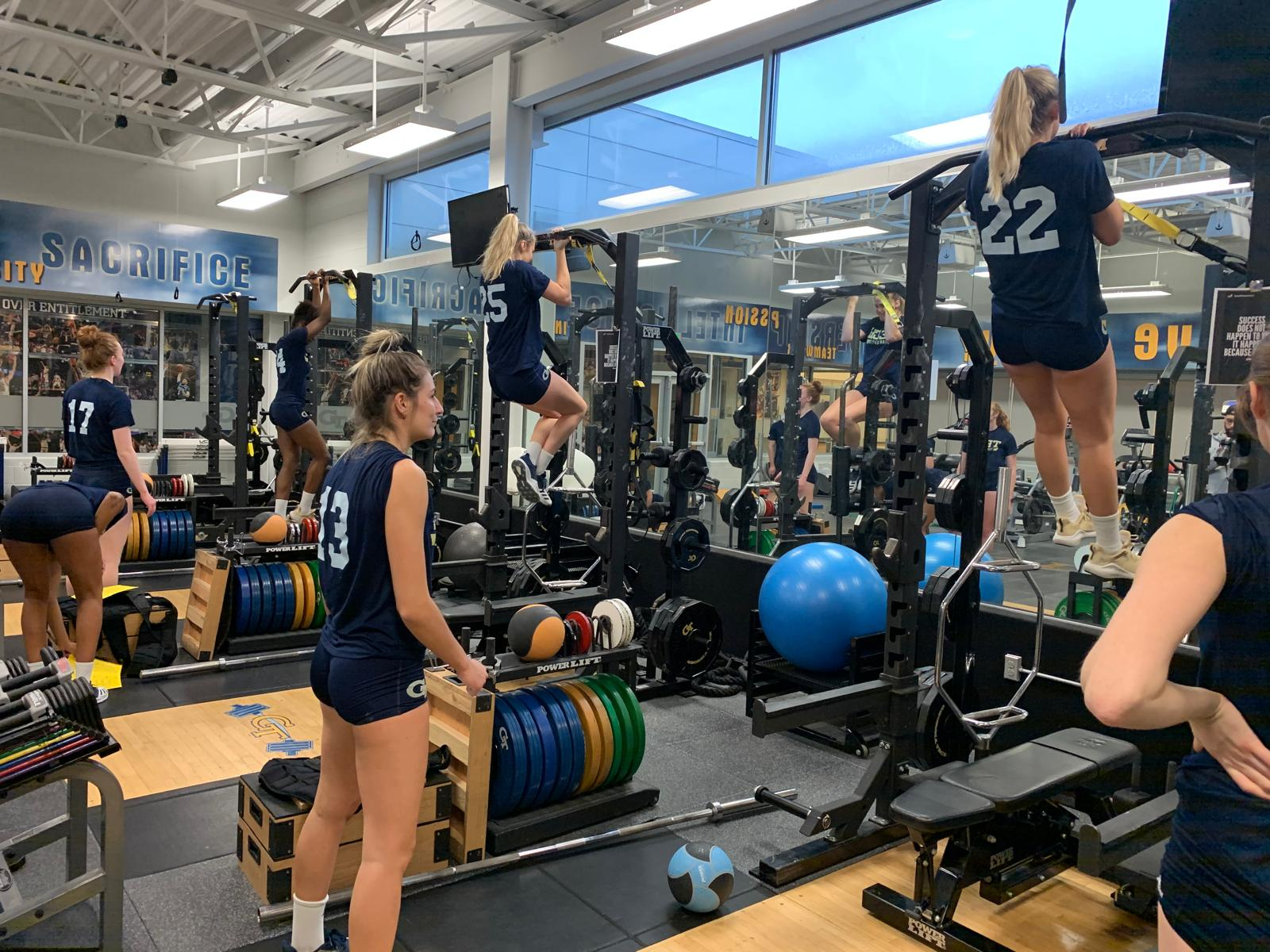
I always knew volleyball required a high IQ, strong hands, and leadership, but I didn’t fully understand how big of a role conditioning and strength training played at that level.
It wasn’t just about being technically good — it was about being able to perform at your highest level when you’re completely exhausted.
Every drill, every practice, every match demanded that you stay sharp mentally while your body was fatigued.
That was a huge adjustment for me.
I made it a point to lean into that early on.
I spent extra time with our strength coach and with Claudio, getting additional lifts and conditioning in, and I would also get extra setting reps before practice when I was already tired.
It was hard, and there were definitely days where it felt like a grind, but that’s where I saw the most growth.
Over time, that work really paid off.
It changed how I competed and gave me a level of confidence I didn’t have before.
By the time I got into tight matches, especially fifth sets, I felt prepared — not just physically, but mentally.
What used to feel overwhelming started to feel manageable, and that was a direct result of pushing through those tough training moments.
What are the biggest differences between high school/club and NCAA volleyball?
The biggest difference between high school/club volleyball and NCAA volleyball is the pace of the game — and it’s not just a little faster, it’s on a completely different level.
In high school and club, you have moments to reset between plays, and mistakes, while frustrating, don’t happen as quickly or as frequently.
In college, everything happens faster:
the ball comes at you with more speed,
players move quicker,
and decisions have to be made in a fraction of a second.
You’re constantly thinking, adjusting, and reacting without much time to process.
It’s not just physical speed, either — it’s mental speed.
You have to read the game, anticipate the opponent’s moves, and communicate with your teammates instantly.
The rallies are longer, the defenses are tighter, and every touch counts more because one small misstep can swing the point.
⸻
3. The Responsibility of a Setter
What does it really mean to run an offense?
Running an offense is about so much more than just setting the ball.
It’s about being a leader on and off the court.
A setter is the quarterback of the team — responsible for controlling the tempo, making smart decisions under pressure, and keeping the team organized and focused.
To do this well, you have to earn the trust of your teammates and coaches by consistently making the right choices, even in tough situations.
Communication is critical.
You have to understand each hitter’s strengths, tendencies, and confidence levels, and adjust your sets accordingly.
You also have to be aware of the opposing defense and make strategic decisions that give your team the best chance to score.
This requires mental toughness, focus, and preparation.
Running a high-level offense demands long hours in the gym, film study, extra reps, and a commitment to always outwork everyone else.
At the end of the day, it’s about controlling what you can control — your effort, energy, and mindset — so that your teammates can perform at their highest level.
What do young setters often misunderstand about the position?
Many young setters think it’s just about having “good hands,” meaning they focus only on the technical aspect of delivering a clean set.
While that’s important, it’s really only a small fraction of what the position requires.
A setter’s role is equally about leadership, strategy, and decision-making.
Setters have to read the defense in real time, anticipate blockers’ movements, and decide who to set to in the blink of an eye.
They must communicate constantly with hitters, manage team energy, and maintain composure even when the game isn’t going the team’s way.
Young setters often underestimate how mentally and physically demanding it is to be the person running the offense — every decision affects the team’s success.
Great setters combine skill, intelligence, and leadership to elevate everyone around them, and that’s what separates a good setter from a truly elite one.
⸻
4. Decision-Making During a Rally
What information are you processing as the play develops?
As a setter, you’re constantly scanning and analyzing everything happening on the court in real time.
You’re asking yourself:
Who is scoring us points offensively?
If a hitter is in a groove, you want to find ways to get them the ball again.
You’re also reading the blockers:
What are they doing?
Who are they prioritizing?
So you can make decisions that give your hitters the best chance to succeed.
At the same time, you’re tracking the defense:
Where are the defenders positioned?
Are they playing rotational or perimeter defense?
You’re constantly anticipating how the defense will react to your set and preparing to adjust if needed.
All of this happens in fractions of a second while also communicating with your hitters and managing the team’s tempo.
The setter is essentially processing multiple layers of information simultaneously — offense, defense, and timing — to make the smart play that gives your team the best opportunity to score.
⸻
5. Leadership
How does a setter build trust with hitters?
A setter builds trust with hitters and teammates by getting to know them as people, both on and off the court.
Spending time together outside the gym helps create strong connection and understanding of each other’s strengths, tendencies, and communication styles.
Trust is also built over time by consistently doing the right thing in every situation and showing reliability through repeated actions.
Communication is another key element — figuring out what works, what doesn’t, and being open and honest about adjustments allows hitters to feel confident in the setter and the offense as a whole.
The combination of connection, consistency, and clear communication forms the foundation of trust between a setter and teammates.
⸻
6. Two College Experiences
What did Georgia Tech and UCLA teach you about high-level volleyball?
Playing at Georgia Tech and UCLA taught me that everything in high-level volleyball is earned.
Nothing is ever given to you.
Talent alone isn’t enough.
You have to put in the work every single day — whether it’s in practice, the weight room, or extra skill sessions.
There are no shortcuts when it comes to developing your game, improving your conditioning, or building mental toughness.
I learned that consistency, discipline, and a relentless work ethic are what separate good players from great ones.
Beyond the physical side, these programs taught me how to compete under pressure, push through fatigue, and maintain focus when the stakes are highest.
The experience showed me that success in volleyball and in life is the result of effort, preparation, and a commitment to always getting better.
⸻
7. From Athlete to Club Director
Why did you decide to create 407 Volleyball Club?
I decided to create 407 Volleyball Club because I wanted to grow the game and create opportunities for young athletes to experience the joy, discipline, and life lessons volleyball can teach.
More than anything, I wanted to pour into young girls’ lives — to mentor them, help them develop confidence, and guide them as they chase their dreams both on and off the court.
Volleyball has given me so much, and creating this club was my way of giving back and providing a space where players can work hard, grow, and feel supported while pursuing their goals.
What kind of environment do you want to build for young athletes?
The environment I strive to build at 407 is one where athletes leave not only as better players, but as better people.
I want our players to feel challenged in ways that push them to grow while also knowing they are supported every step of the way.
Practices and training should be fun, engaging, and exciting so coming to the gym is something they look forward to.
At the same time, I want them to learn important life skills:
resilience,
teamwork,
accountability,
and leadership.
The goal is to create a culture of growth, confidence, and positivity that extends far beyond the court.
⸻
8. Advice for Young Setters
If you could speak to a 15-year-old setter, what would you tell her?
I would tell her to get as many setting reps as possible and to push herself in the weight room because the work she puts in now will pay off in ways she might not even see yet.
The skills, strength, and discipline she develops at this stage lay the foundation for everything she will do on and off the court.
But just as important as the physical and technical work is the mindset she brings every day.
Volleyball is a team sport, so I would tell her to enjoy the journey and be a great teammate.
Build strong relationships, support your teammates, and embrace challenges together.
These experiences will shape not only her game but also her character.
The people she meets and the moments she shares on the court are often the most memorable parts of the sport.
That’s why this is the best part of my job — watching young athletes grow, develop confidence, push themselves, and create bonds that last far beyond volleyball.
It’s not just about teaching skills.
It’s about helping them become strong, resilient, and caring people while enjoying the game they love.
⸻
9. Final Reflection
What does volleyball mean to you today?
Volleyball has given me so much, and I truly can’t imagine my life without it.
As a player, it taught me discipline, teamwork, and resilience.
Now, as a mom and coach, my perspective has deepened, and I feel an even greater sense of gratitude for everything the sport has brought into my life.
Volleyball has connected me to incredible people, like Claudio, who believed in me, challenged me, and pushed me to be my best both on and off the court.
Today, volleyball isn’t just a game.
It’s my community, a source of life lessons, and a way to give back.
Coaching allows me to pour into young athletes’ lives, helping them grow as players and as people while trying my best to share the same guidance, encouragement, and support that I was fortunate to receive.
Volleyball has shaped who I am, and I feel grateful every day for the experiences, relationships, and opportunities it continues to provide.
⸻
A Conversation with My Former Setter
Question 1 — The Setter’s Mind
During your time at Georgia Tech, you ran one of the most efficient offenses in the country.
From your perspective, what separates a good setter from a truly elite one?
What separates a good setter from a truly elite one is fight — the drive to push through mental fatigue, physical exhaustion, and the moments when you feel like giving up.
Elite setters refuse to settle for anything less than their best, even on the toughest days.
Beyond individual effort, they also align their goals with their teammates, understanding that success comes from working together and lifting everyone up.
They communicate, adjust, and support their hitters to make sure the whole team is on the same page.
Elite setters combine skill, toughness, and leadership, creating an environment where everyone can perform at their highest level.
Question 2 — Growth Through Challenge
Looking back at your college years, what were the most important lessons you learned through the challenges of training and competition?
One of the most important lessons I learned is that the toughest challenges are often the most rewarding.
The long hours in the gym, the extra conditioning, the mental fatigue after back-to-back practices and matches — they all pushed me beyond what I thought was possible.
Going through that grind taught me resilience, discipline, and the value of hard work.
Those difficult moments weren’t easy at the time, but they shaped me into a stronger athlete and a stronger person.
Question 3 — From Player to Leader
Now that you are developing athletes through 407 Volleyball Club, how has your experience as a college setter influenced the way you coach and mentor young players?
I try to hold my players to a high standard because that’s what I had as a player and that’s when I was at my best.
I also try to teach them that THEY have to do the work.
I wish I could go back and do it again.
I wouldn’t change a thing.
I just love it, and I hope my players love it too and don’t take the time they have playing for granted because it doesn’t last forever.
⸻
Coaching athletes who later become leaders in the sport is one of the most rewarding experiences for a coach.
Seeing Matti now guiding the next generation of players shows how the lessons learned on the court can extend far beyond the game itself.
⸻
Standards create discipline.
Discipline sustains excellence.
From fundamentals to gold standards.
Claudio Pinheiro